
Finding Carroll County Property Records
Carroll County property records live in separate systems, so no single screen answers every question, and Web GIS is the natural first stop for placing a rural address on a parcel. Take the full tax-map number onward. The Commissioner of the Revenue can work from it, and so can the Circuit Court Clerk. The Commissioner’s pages explain assessment work and link the 2025 assessment books. The county site offers no public parcel-card search. The Treasurer’s WIPP portal covers tax search and payment. The Clerk’s Virginia Secure Remote Access system holds the recorded land instruments. Each handles a different piece.
Keep each question narrow. The tax-roll owner of record is only a starting point. A deed shows the filed instrument, while a tax bill lists charges and payment status, never market price. A GIS line helps with orientation, not a survey. A good Carroll County property search joins records by tax-map number and deed reference instead of treating one screen as a title report.
- Write down the full 911 address, including road type and any rural route clue.
- Locate the parcel in Carroll County Web GIS and copy its entire tax-map key.
- Ask the Commissioner for assessment and owner-of-record information if no public card appears online.
- Search the Circuit Clerk land index by both grantor and grantee, then note the book and page or instrument number.
- Use the Treasurer’s tax search and permit list as separate checks, then inspect the recorded plat for boundary detail.
Where Carroll County Keeps Property Records
Three Carroll County offices divide the record trail. The Clerk records deeds, deeds of trust, plats, judgments, liens, wills, and estate filings. The Commissioner values real estate, maintains assessment books, updates map data from transfers, splits, permits, and new construction, and administers exemptions. The Treasurer bills and collects the tax. Delinquent-property sale notices come from that same office.
Carroll Circuit Court Clerk
605-1 Pine Street, A230
Hillsville, VA 24343
276-730-3070
Commissioner of the Revenue
605-7 Pine Street
Hillsville, VA 24343
276-730-3030
Carroll County Treasurer
605-10 Pine Street
Hillsville, VA 24343
276-730-3060
The Commissioner reports 32,462 taxable real-estate parcels and 1,274 exempt parcels. Assessment books, transfer and split updates, permit-related changes, and exemption administration fill out the office's work. Those totals describe the whole county roll. They are not a result for one parcel. The county publishes no public parcel-card search. So a detail missing online may take a direct office request. The Commissioner's official page explains its assessment responsibilities and contact route.
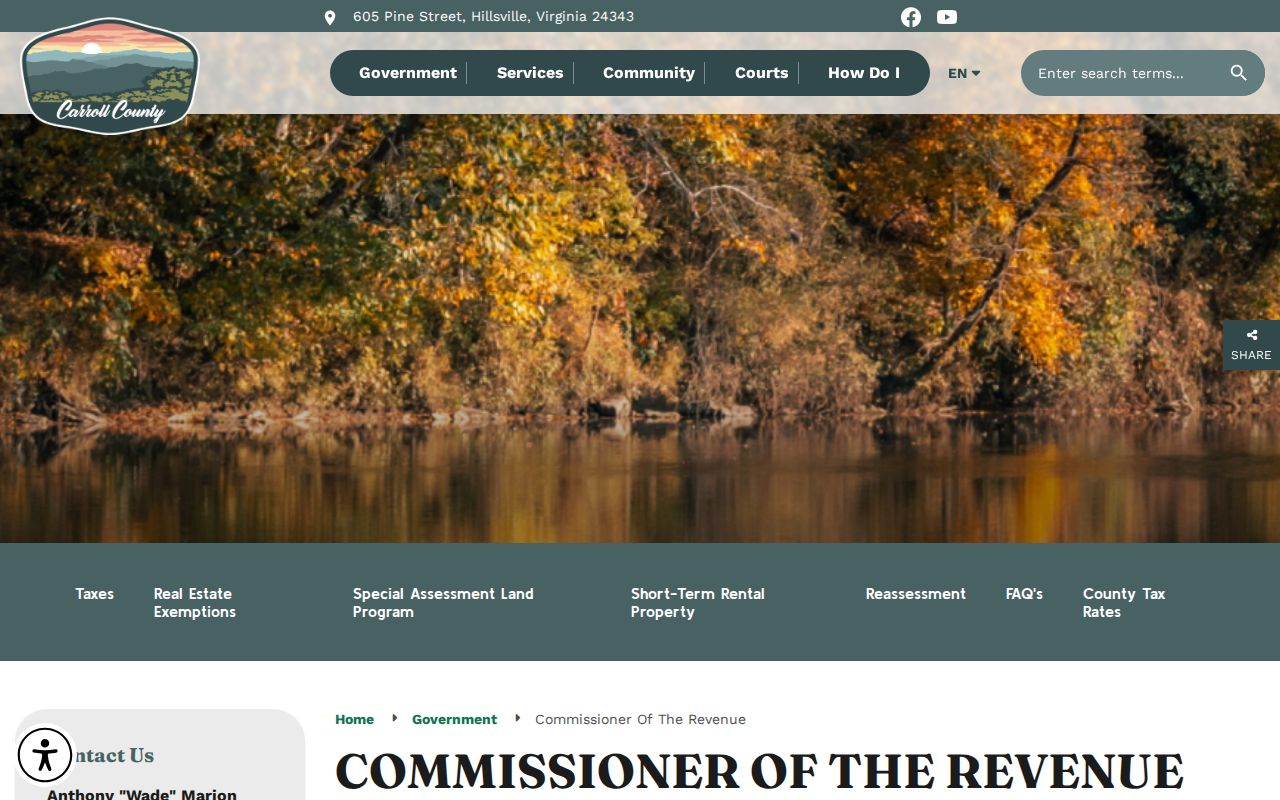
The county office page offers contact details and directions for visitors. It does not return owner or assessment data. For actual parcel details, use the parcel number at the recorder or assessor.
Carroll County Deed Records Have a Paid Remote Gate
The Circuit Court Clerk is Virginia’s recorder of deeds. Remote access runs through Secure Remote Access, the state system. Carroll County requires a signed agreement plus a $35 monthly subscription. You complete the agreement for Carroll County Circuit Court, then pay in person, by mailed check, or by phone card with a 4% convenience fee. The Clerk notifies you once the account is active. This gate is a remote-access condition, not a privacy claim over public records.
The statewide system is organized court by court. Its public page shows no Carroll deed-search fields and no earliest online year. A login wall makes one-time searches impractical. Use the courthouse counter instead, or ask the Clerk about a document request. Certified-copy prices do not appear on the county page. For older deeds, the Library of Virginia catalogs grantor and grantee indexes on microfilm covering 1842 through 1927.
Carroll’s SRA instructions show the agreement and the fee.
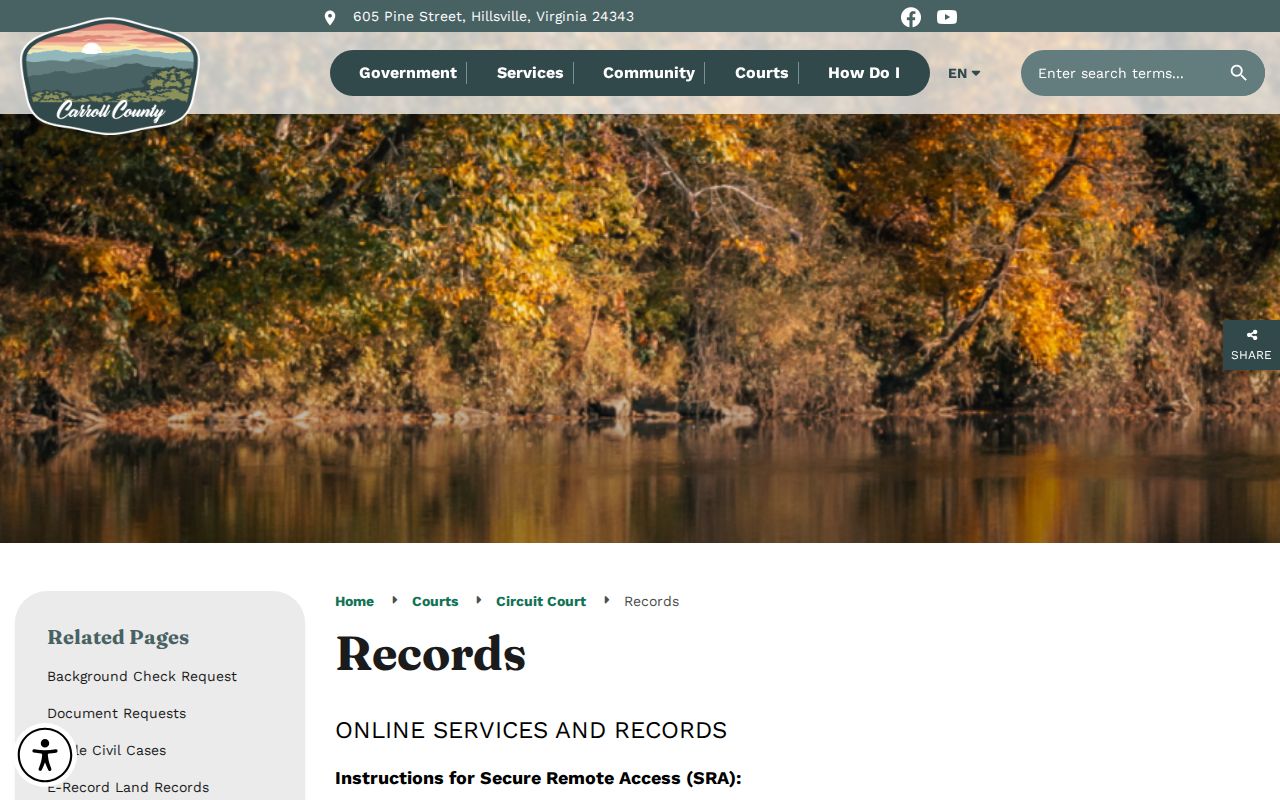
A single deed check rarely justifies the monthly fee.
Carroll County Property Records by Type
One land search rarely needs just one record. A deed, a tax bill, an assessment entry, and a parcel map can all point to the same place while documenting different events. Match the keeper to the question.
Types of Carroll County Property Records
Carroll County splits its records among the Clerk, Commissioner, Treasurer, GIS, and Building Official. The fields overlap. They carry different legal weight and update on different schedules.
| Record Type | What It Documents | Kept By | Access |
|---|---|---|---|
| Deeds and deeds of trust | Transfers, lending instruments, releases | Circuit Court Clerk | SRA, counter, request; SRA is $35/month |
| Assessment books | Tax owner, property ID, value, exemption | Commissioner of the Revenue | County pages, phone, or office |
| Tax bills and delinquencies | Charges, payment status, sale notices | Treasurer | WIPP and Treasurer page |
| Plats and surveys | Recorded lot layout or survey references | Clerk; Library of Virginia | SRA, counter, archive; GIS for context |
| Permits | Issued work tied to name, 911 address, type | Building Official | Online list and office request |
For instruments, use the Carroll County deed records index. For a bill, an exemption, or payment status, the property tax records section follows the Commissioner and the Treasurer separately.
The 2025 Carroll County Reassessment
The latest general reassessment took effect January 1, 2025. A sales study began the work in December 2023 and ran through 2024. Wampler-Eanes Appraisal Group handled parcel review and inspections. Virginia law, per the county, requires assessments at 100% fair market value under Va. Code §58.1-3201. That standard sets the tax value for the effective year. It does not promise every value matches a current offer or sale.
The appeal window is closed. Values are now final except for clerical error, an improvement change, a destroyed structure, or a land change. A current assessment can lag later market activity. When weighing what a parcel was worth at a point in time, compare the assessment year and its land and improvement parts against recorded sale evidence.
The reassessment page links books and the final-value notice.
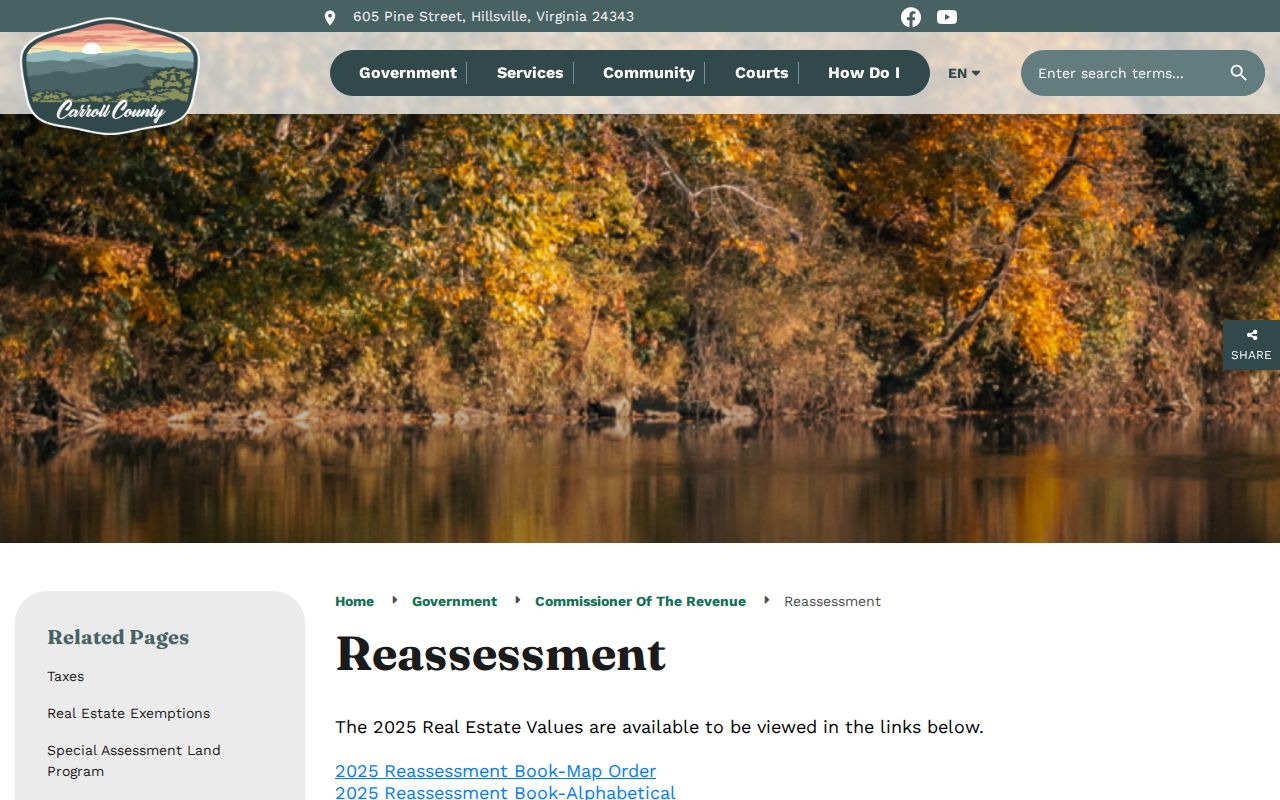
The effective date separates an assessment from a deed sale.
Reading Carroll County Tax-Map Numbers
Carroll's tax-map keys mix letters, digits, and hyphens. The county's 2026 notice offers examples like 151-A-122, 116-A-25, 129A-3-84, 129C-3-36, 150A-2-4-1, and 109-A-222. The county publishes no legend explaining each component. Guessing what a part means invites errors. Copy the whole key exactly. That precision matters when moving among Web GIS, the Commissioner, the Treasurer, and deed references.
The ArcGIS parcel service plots map boundaries, index sections, and township-range layers. It also draws roads, lot lines, and parcel polygons. Those layers put a key in context. They never replace the legal description. When a notice lists several lots, search each number separately. One owner can hold multiple tracts under a single tax mailing address.
Carroll County Web GIS opens with access terms. A mapping disclaimer also appears for anyone starting a parcel search.
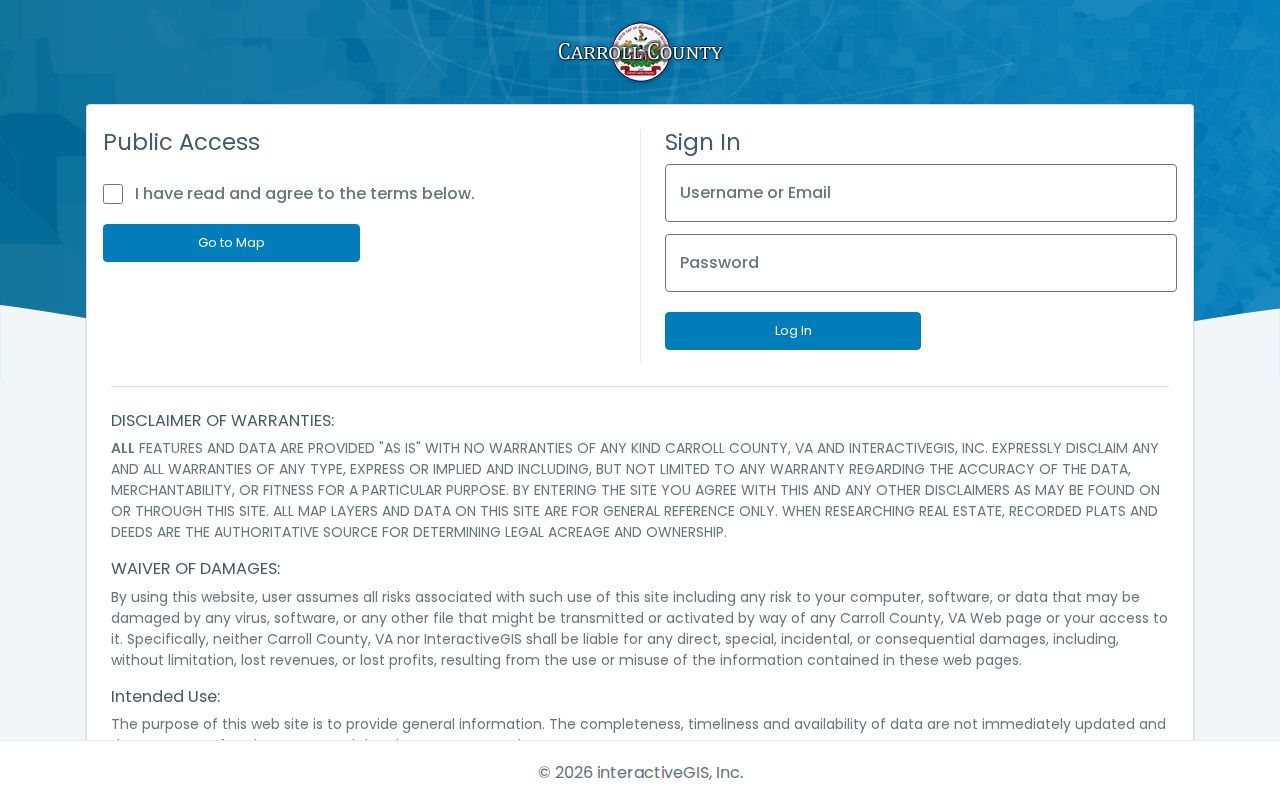
Use the viewer to orient; verify with the plat.
Carroll County Tax Bills and Sale Notices
The Treasurer links a WIPP Search & Pay Taxes system for Carroll County tax bills. That system depends on a JavaScript form, and any portal payment charge is not stated. For a bill or payment-status question, call the Treasurer's office at 276-730-3060. County installments come due June 20 and December 5. An unpaid installment turns delinquent the next day. It then carries a 5% penalty and 10% annual interest under the county ordinance and Va. Code §58.1-3915.
The Treasurer also posts non-judicial sale notices. The 2026 notice listed owners, tax-map keys, and short descriptions, with bidding closing September 18, 2026 at 11 a.m. Treat a notice as a lead. It does not prove title changed. Confirm payment, redemption, sale confirmation, and the final recorded instrument with the responsible offices.
The Treasurer's page posts delinquent property notices. Its listings show the descriptions and map keys a researcher can carry to the parcel map.
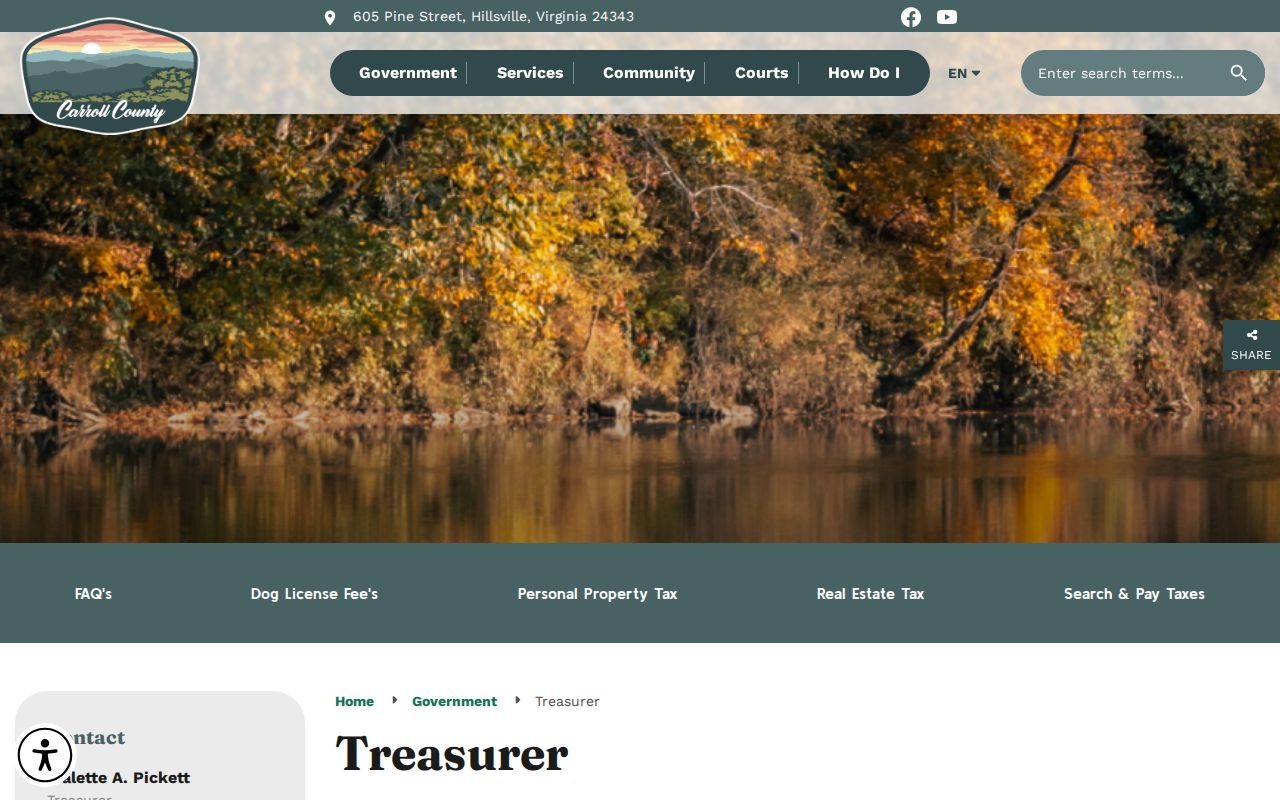
Copy each key as printed; confirm with the Clerk.
Carroll County Deed Books Begin in 1842
Carroll County formed from Grayson County in 1842. Its earliest deed books begin that same year. The Library of Virginia catalogs grantor and grantee indexes covering 1842 through 1927. It also lists Plat Book 1 for 1842-1961 and Surveyors' Book 1 for 1842-1910. Many reels carry interlibrary loan marks. The catalog is a finding aid. It tells you which reel to request, not the contents of every deed.
For a nineteenth-century parcel, start with the prior-instrument reference in the current deed. Then compare names, acreage, adjoining owners, and survey calls. Work back through Carroll County deed records that way. Addresses are weak clues across a long span. The online SRA cutoff is not stated. Do not assume the full 1842-forward run is searchable online.
The LVA finding aid splits grantor and grantee name indexes into A-J and K-Z ranges. Deed-of-trust volumes for 1890-1937 sit apart from the general deed indexes. Note the book or reel holding a name before requesting archival material. A mortgage or release can force a search through both index types. Not every historical image opens as a web search result. Confirm where a reel can be viewed.
The Library of Virginia's Carroll catalog lists the deed, plat, and survey runs.
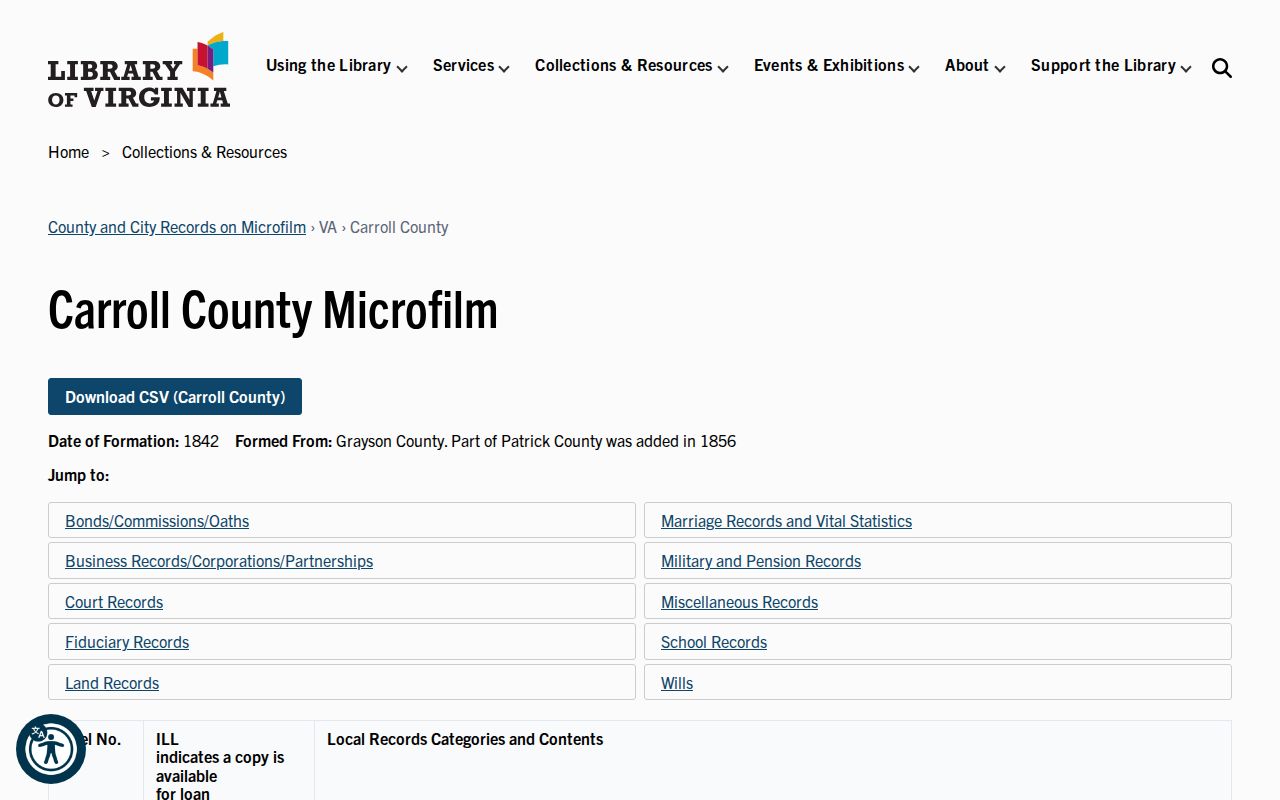
Use those reel dates to request the right book.
WPA Workers Typed Carroll County Deeds
In the 1930s, WPA workers typed out Carroll Deed Books 1 through 10, spanning 1842-1871. Typed text makes a hard-to-read name easier to spot. It is still a lead, not the official instrument. One Book 6 transcription shows "1587" where the surrounding dates indicate 1857. Check any page against the Clerk's original or LVA microfilm before citing it.
These transcriptions bridge a name index and an old book image. Record the grantor, grantee, book, page, date, and land description. Then locate the official deed. Compare adjoining land, acreage, and prior deed references. That keeps a same-name person from being mistaken for the right owner of record.
Carroll's digital history page describes the WPA work and lists the book spans.
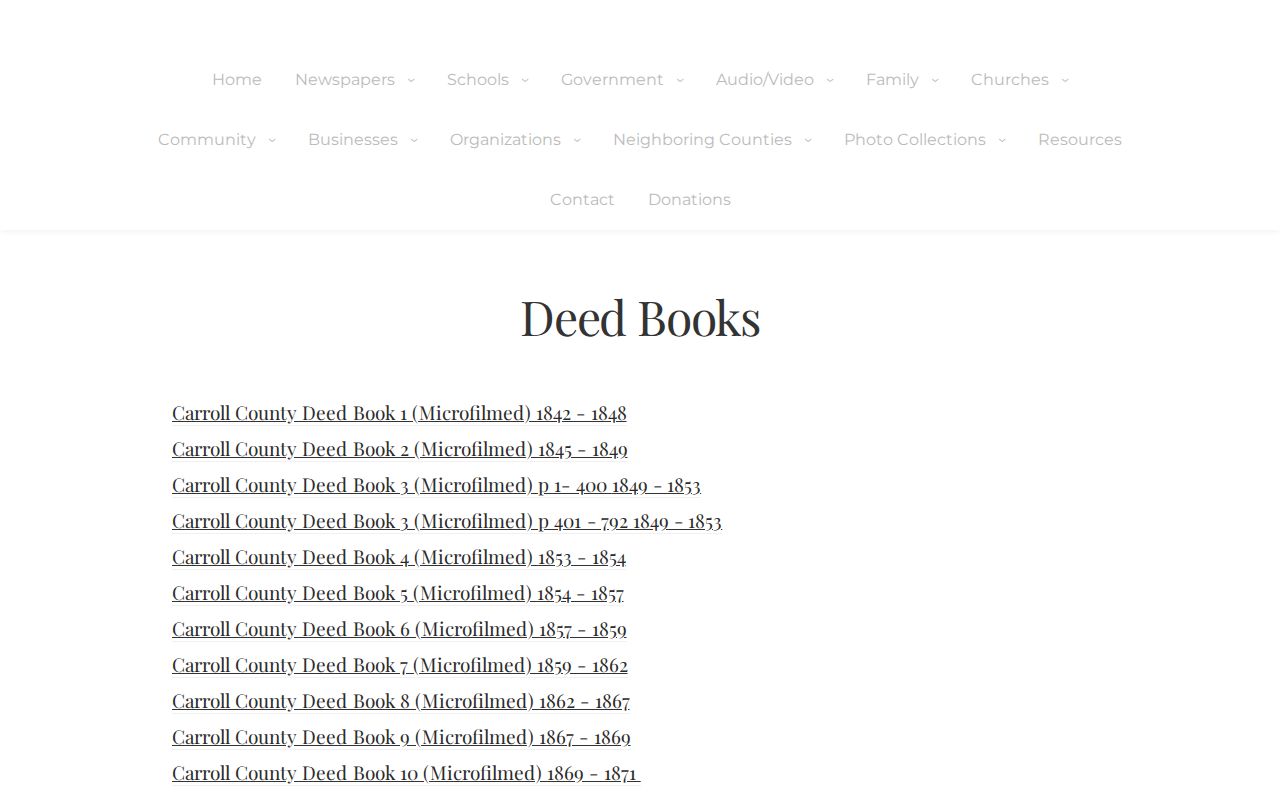
Typed text finds passages; the deed record verifies.
Hillsville’s Boundary Points to Book 38
Hillsville is Carroll County's only incorporated municipality. Galax sits beside the county as an independent city, not a Carroll County town. The current Hillsville charter defines the boundary by reference to Carroll Circuit Court Deed Book 38, page 266. The pages that follow are part of it. That citation ties a town-limit question straight to a land record in the deed books.
The town's charter history includes episodes in 1878, 1900, and 1940. The current charter dates to 1992. A Hillsville postal address proves nothing about town limits. Compare the county parcel map, the city-limit layer, the charter description, and town records. Planning and zoning history rests with the town's commission and Board of Zoning Appeals files.
Virginia's Hillsville charter contains the Book 38 reference. Its text points the way into the deed records.
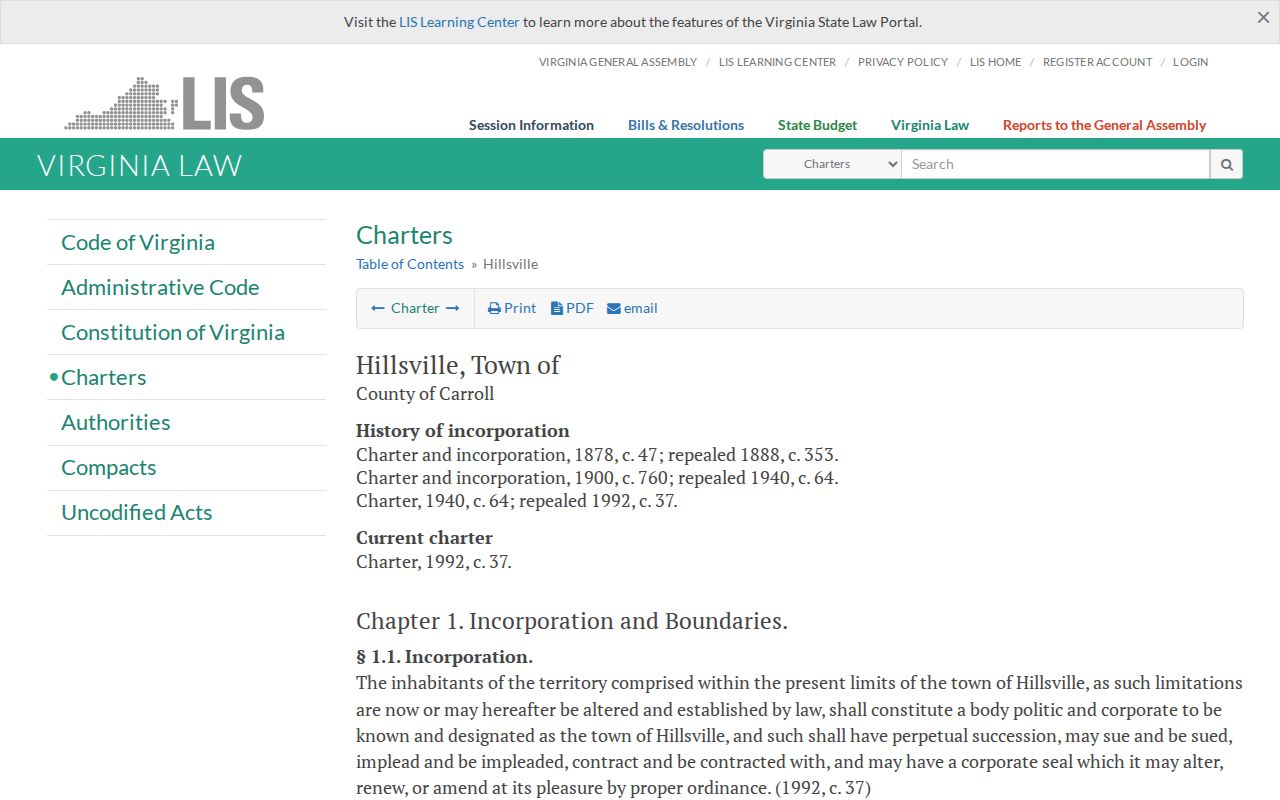
Treat the charter as a lead at the town edge. Confirm with the current map and Town Hall.
When Carroll County’s Web Search Stops
A stalled Carroll County property search rarely means the record is gone. It usually means the page hides a field. The Treasurer portal keeps its controls out of view. The Commissioner's pages show no public parcel card. The SRA page names no online cutoff. Skip the wait and call the office, visit the counter, or send a written request. Carry a parcel number or a book-and-page reference with you.
Virginia FOIA lives at Va. Code §§2.2-3700 et seq., and Carroll County routes county requests through the County Administrator's office at 276-730-3001. FOIA does not replace the Clerk's land-record process. Exemptions and real copy costs can apply. A tight request with a map number, date span, and file type beats asking for everything on a parcel.
Carroll County's FOIA page lists the local contact and process.
Limits of Carroll County Property Records
No single document settles everything. A tax-owner field, a map polygon, a sale notice, or a deed-index entry is not a title opinion. Even a current deed can leave open questions about older liens, estate interests, restrictions, easements, or an unreleased deed of trust. Map lines are not boundary surveys. Assessed value is not a sale appraisal. Treat each Carroll County property record as evidence of one thing, then take the legal question to the custodian or a qualified professional.
Lawful use. Public records support property research, due diligence, history, and civic review. Virginia’s stalking statute, Va. Code §18.2-60.3, addresses repeated conduct intended or known to place a person in reasonable fear; a public record is not permission to harass anyone.