
Carroll County Deeds and Related Instruments
The Circuit Court Clerk keeps Carroll County's land records. The office records deeds, deeds of trust, plats, judgments, liens, wills, estate filings, fictitious names, UCC filings, and court records. A deed conveys an interest in land. A deed of trust works differently, securing a loan rather than transferring ownership. A release or satisfaction later records that the secured obligation was discharged.
| Deed Type | What It Does | Common Use |
|---|---|---|
| Deed | Conveys an interest in real estate | Sale, gift, or other transfer |
| Deed of trust | Secures a debt against land | Loan instrument; later release may follow |
| Plat | Shows recorded lots or survey references | Subdivision or land description research |
| Release or satisfaction | Records discharge of a prior claim | Check after a loan or lien |
| Executor or fiduciary deed | Conveys property through an estate process | Probate-related transfer |
One recorded instrument rarely settles a title question. Follow the chain into related releases, assignments, judgments, and court orders whenever it leads there. The Clerk's index is only the route. Read the image itself, and compare its legal description with the current deed and plat before relying on a party-name match.
Carroll County SRA Access Costs $35 Monthly
Remote land-record access in Carroll County runs through a signed Circuit Court SRA agreement. The subscription costs $35 per month. You can pay in person or by mailed check. A card payment by phone adds a 4% convenience fee. The account goes live once the Clerk sends notice. The public page lists no image fee or certified-copy price, so confirm current charges before ordering a copy.
A one-time search may not justify a subscription. The Clerk's counter still handles walk-in requests. Mail requests appear among the Clerk's records links. The local page names the remote agreement but does not say whether the full historical index is online or give a cutoff date. The state SRA landing page likewise shows no Carroll deed fields without an account.
The Carroll Clerk's records page lays out the local access terms, including the agreement and the monthly charge.
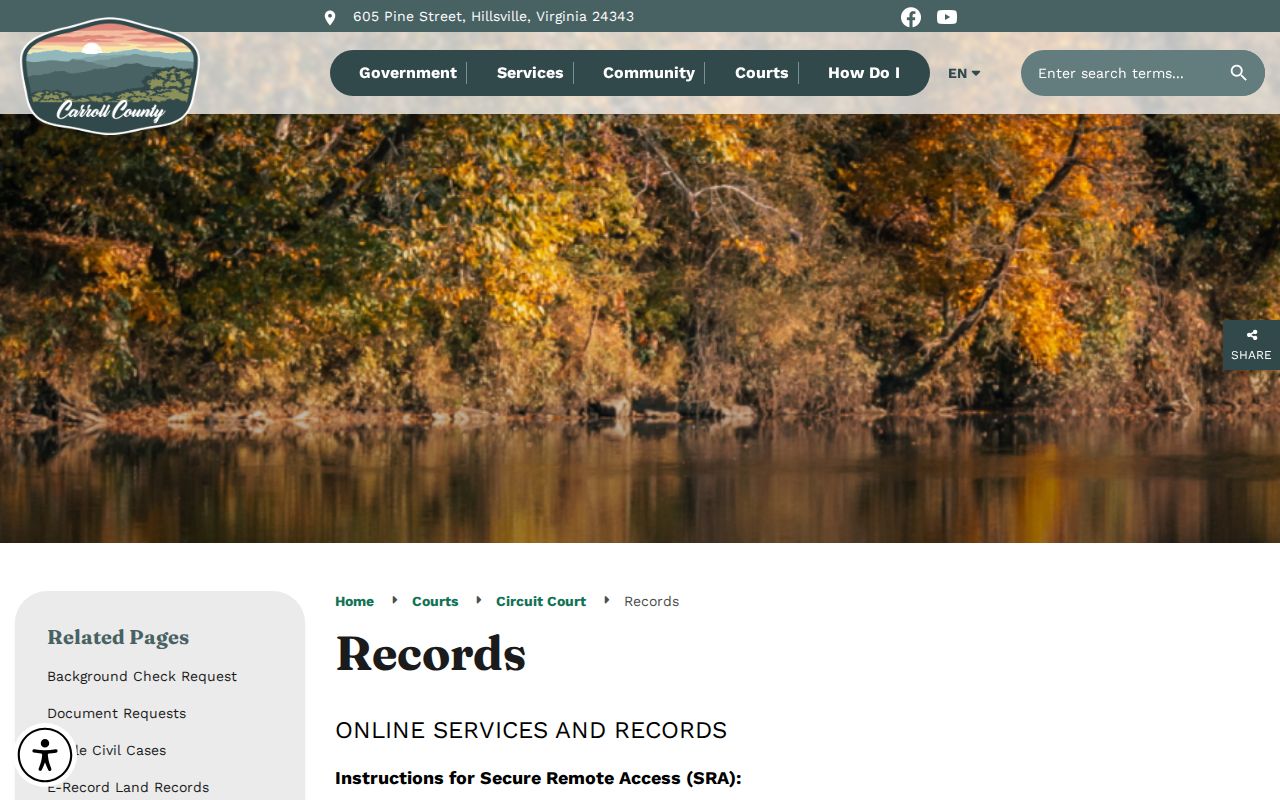
Compare the $35 subscription with a counter visit first. A single mail request may serve a short task just as well.
Carroll County Grantor and Grantee Search
The SRA portal is chosen court by court. For land records, search your party twice. Run the name as grantor and again as grantee, since a person can sell one parcel and buy another. Carroll's exact search fields stay behind the account, so confirm what each view offers once you are signed in.
| Search Field | Type | What Research Confirms |
|---|---|---|
| Court/locality | Dropdown | Select Carroll County Circuit Court |
| Party name | Text | Search grantor or grantee; vary spelling and initials |
| Case number | Text | Local court search field, but for case information |
| Hearing date | Date | Case search mode, not deed index |
| Document type | Dropdown | Exact control not located in public view |
| Recording range / book-page | Date or text | Controls not confirmed; book/page is a useful known citation |
- Grantor
- The party conveying an interest.
- Grantee
- The party receiving an interest.
- Chain of title
- The ordered sequence of recorded conveyances.
- Book and page
- A volume citation used to locate an older instrument.
What a Carroll County Deed Index Entry Shows
A good index note saves the details you need to retrieve the image. Expected fields follow Virginia land-record conventions. Verify what the portal actually displays in your account view. Treat no consideration figure or parcel reference as guaranteed.
| Parties | Indexed grantor, grantee, and role |
|---|---|
| Instrument | Document type and recording date |
| Reference | Instrument number or deed book and page |
| Land clue | Legal description or parcel reference, if indexed |
| Image | Link or account-enabled image access, not confirmed free |
Named parties can be a person, estate, trustee, or business. Compare the tract description, the prior instrument reference, and the acreage instead of trusting a name alone.
Virginia Secure Remote Access is the public land-record system. Its landing page posts the terms of access.
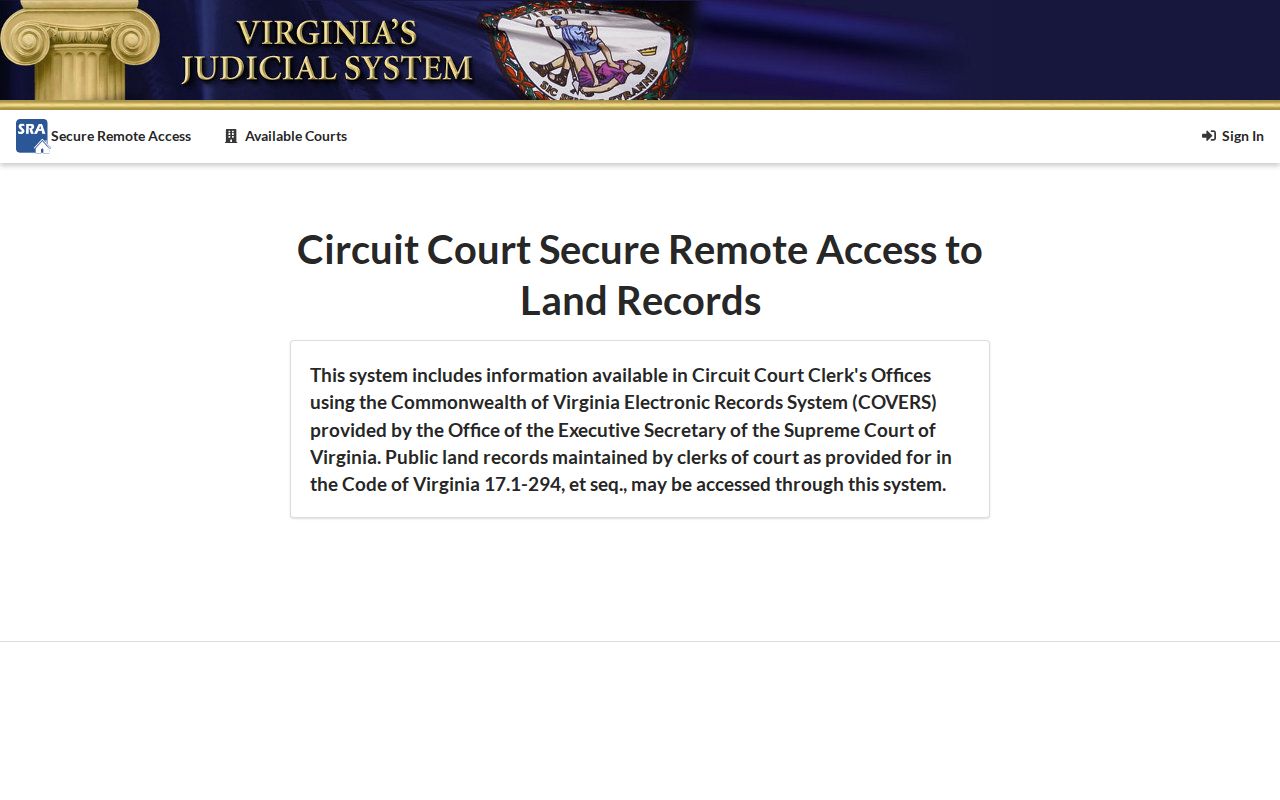
The Clerk page carries Carroll's costs and agreement steps.
Walking the Carroll County Party Index
Start with the newest deed reference and note the buyer, seller, legal description, and prior instrument cited on the page. Search the grantee first. That is the party who received the deed. Then run the same name as grantor to catch the later transfer. Keep working back one recorded link at a time. At each step, confirm the land described is still the same tract; this is a chain-of-title method, not a portal tutorial.
- Find the current deed by the current grantee or a known deed reference.
- Record the prior grantor, book and page, date, and legal description.
- Search that prior grantor as a grantee, then verify the same land in the earlier instrument.
- When the index ends, use the Library of Virginia reels or Clerk deed books; the online cutoff is not published.
- Grantor
- The party who transfers the interest.
- Grantee
- The party who receives the interest.
- Chain of title
- The sequence of instruments that links successive owners.
- Book/page or instrument number
- A retrieval citation; preserve the form shown by the Clerk.
Carroll County’s 1842 to 1927 Index Reels
The Library of Virginia catalogs separate Carroll County grantor and grantee deed indexes covering 1842 through 1927, split into A-J and K-Z runs. A deeds-of-trust index runs from 1890 through 1937. Those dates describe the microfilm catalog, not the online SRA span. Many reels are marked for interlibrary loan. Ask a library to request the right roll. The Clerk's office can help too.
Older searches demand patience. Initials shift and spellings drift. Handwriting adds its own challenge. When the index yields a book and page, read the deed itself and compare adjoining owners, acreage, and survey calls. An index entry can point to the right volume even when no modern street address existed.
The LVA Carroll microfilm catalog lists the available index and plat runs for requesting the film.
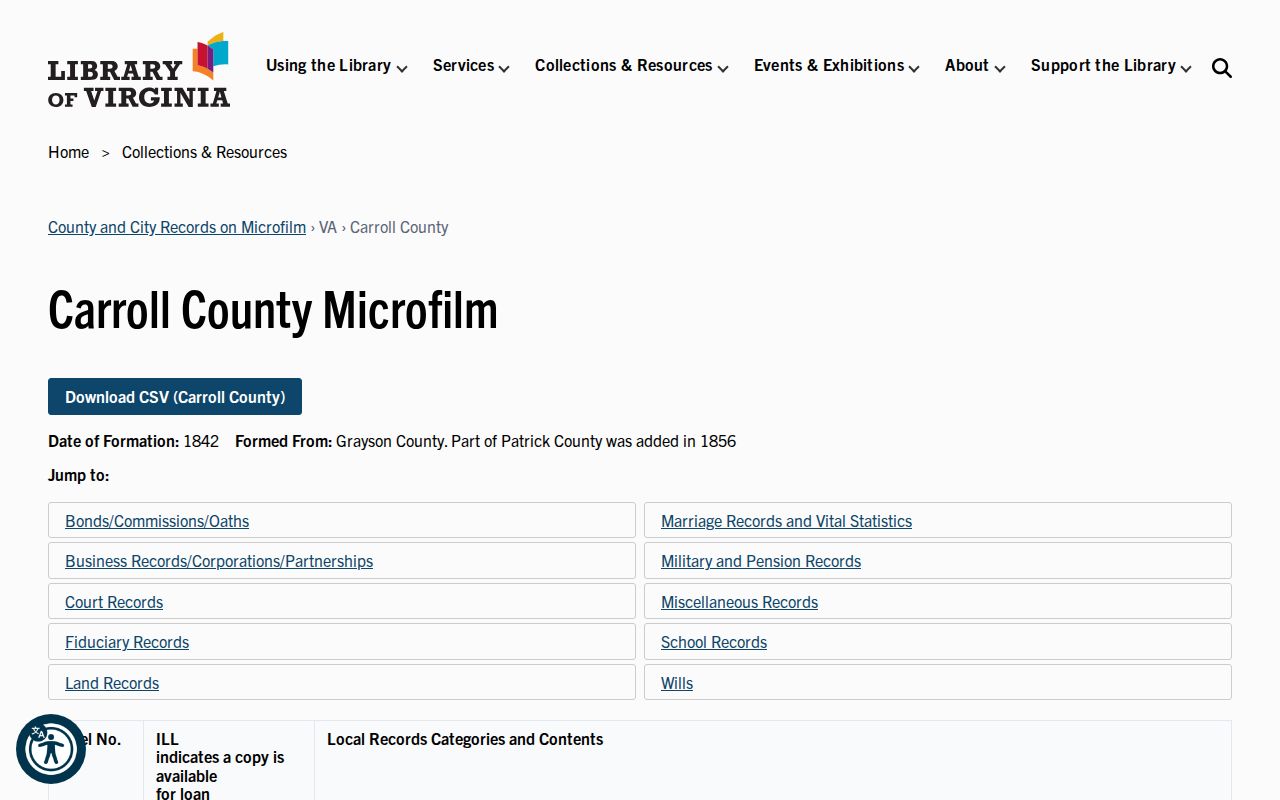
Cite the original volume and page once the reel arrives.
WPA Transcriptions of Carroll Deed Books
WPA workers typed out transcriptions in the 1930s. The work covered Carroll County Deed Books 1 through 10. Those books span 1842 to 1871. Carroll's digital history site lists each book's year range. The originals of the typed transcriptions live in the Clerk's office. A typed page can surface an old name that handwriting would hide. Still, it never replaces the original deed or the microfilm.
Mistakes happen. One Book 6 transcription prints "1587" where the surrounding dates point to 1857. That single slip is reason enough. Check every date, number, and name against the source image. The same care applies when a deed describes land by an old neighbor, stream, road, or acreage rather than a modern parcel number. Older deed records simply speak a different language than today's plats and GIS maps.
The WPA transcription page sits on the county's digital history site. It lists all ten books with their year spans.
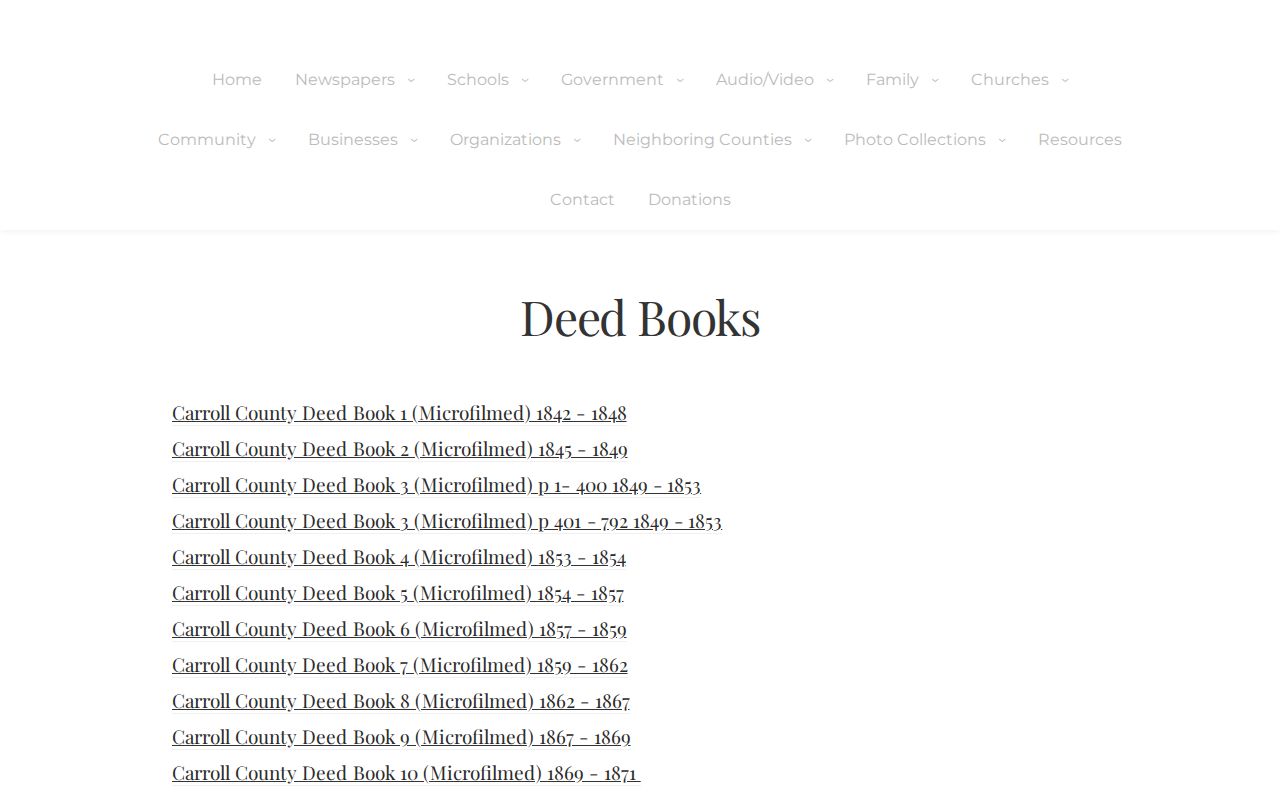
Use the typed text to find a likely passage, then confirm the citation on the archival record itself.
Carroll County Deeds and Court Files
Some Carroll County property transfers grow out of a court case. The Circuit Court handles quiet title suits, partitions, foreclosure litigation, and appeals. It also covers mechanic's-lien enforcement and probate real estate. Its case-information page allows searches by name, case number, or hearing date. Each search runs at an individual court. The search is not statewide. Each circuit court stands alone.
That matters for deed research. A lis pendens, a court order, a release, or a commissioner's deed can explain a change in ownership. An ordinary sale chain leaves that change blank. Court records and property records answer different halves of the same question.
Federal cases arising in Carroll go to the Western District of Virginia. Dockets and documents there run through PACER. When working from a docket, note the parties and case number. Also note the property description, filing date, orders, disposition, and any deed reference. The case portal is a companion source. The Clerk's recorded land instrument remains the direct property record. PACER's official search entry is the route into the federal system.
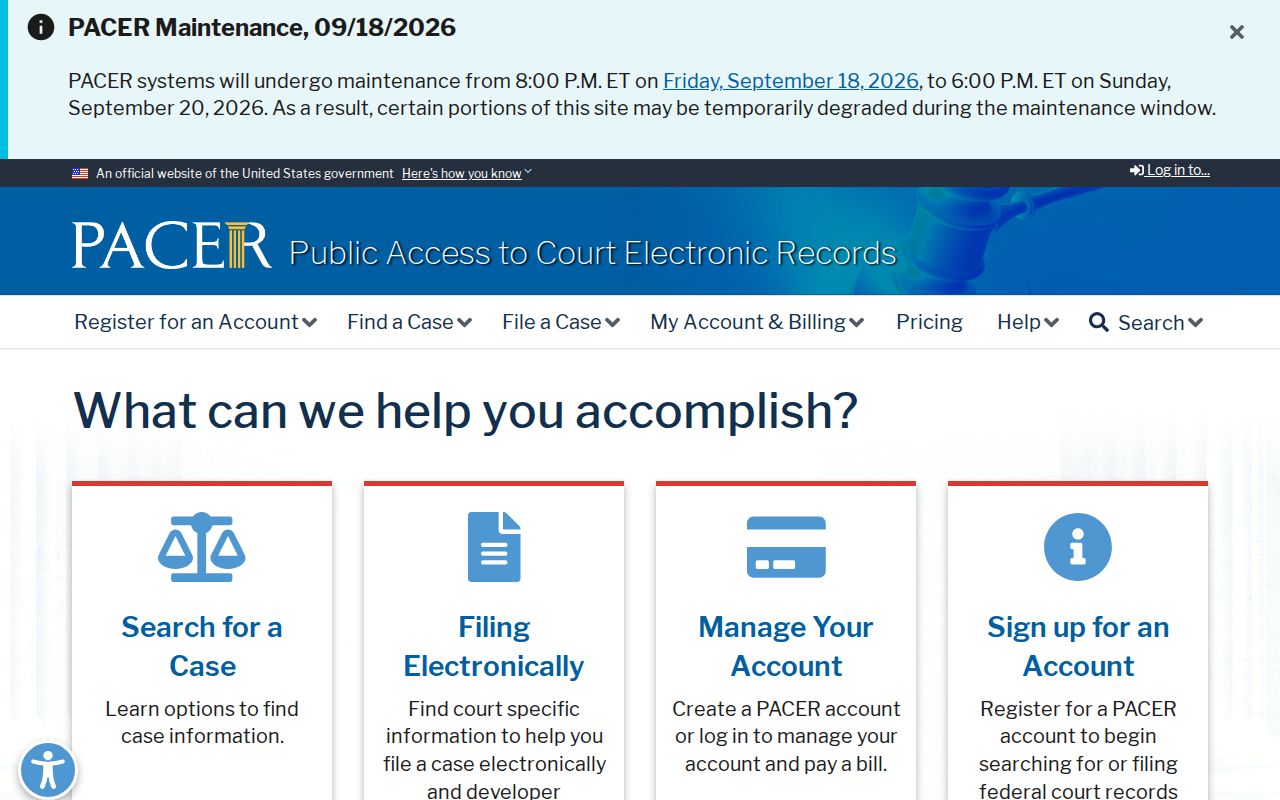
Let the docket lead you to the order or transfer, then confirm the instrument in the Carroll Clerk's index.
Getting a Carroll County Deed Copy
The index yields a book and page or an instrument number. Request that specific deed from the Circuit Clerk. The local records page links document requests and posts the Clerk's public contact. It does not publish copy or certification fees, so ask first. Decide whether an ordinary copy or a certified copy fits your need. Confirm the current charge and accepted payment before sending any money. Remote index access works through the signed SRA agreement and monthly fee described earlier. An index search and a certified copy are separate services.
Older deeds take a different path. Some deeds predate online images. Use the Clerk counter, a mail request, or Library of Virginia microfilm for those. Give the office party names and an estimated date. Include the book and page if known. Add the full land description. Estate deeds and tax sales deserve extra care. Request the court order or sale document that authorized the transfer, too. A tax-sale notice alone never proves a deed was ever recorded.
Recorded, not guaranteed. Carroll County’s deed index shows filed instruments, not every possible interest in land. A search is not a title opinion, and the result should be checked against the recorded image and the full chain.