
Tracing Former Carroll County Owners
Every chain walk starts with the newest deed. Then work backward through the grantee and grantor indexes. Carroll County formed in 1842, and its earliest deed books begin that same year. The record path shifts by era. At each step, capture the book and page or instrument reference, the party roles, the date, and a matching land description, keeping in mind that the county publishes no exact cutoff for its online SRA index.
| Source | Years It Covers | Where Held | What It Shows |
|---|---|---|---|
| Virginia SRA deed index | Current online span not stated | Carroll Circuit Clerk; $35/month remote access | Recorded party and instrument trail |
| General deed indexes | 1842-1927 | Library of Virginia microfilm; Clerk | Separate grantor and grantee runs |
| Deed Books 1-10 | 1842-1871 | Clerk originals; WPA transcription; microfilm | Early conveyances and land descriptions |
| Plat Book 1 / Surveyors’ Book 1 | 1842-1961 / 1842-1910 | Library of Virginia reels; Clerk | Platted lots and survey references |
Recent transfers are simple. Start with the current deed. Continue backward through its prior instrument reference. For a nineteenth-century transfer, use the LVA name index to find a book and page, then read the original or the microfilm. The WPA text can help locate a passage, but as a transcription it must be checked against the record.
Carroll County’s WPA Deed Books
In the 1930s, Works Progress Administration workers transcribed Carroll County Deed Books 1 through 10. Those volumes span 1842 to 1871. The county's digital history page lists the full run. It begins with Book 1, 1842-1848; Book 2, 1845-1849; Book 3, 1849-1853; Book 4, 1853-1854; Book 5, 1854-1857; Book 6, 1857-1859; Book 7, 1859-1862; Book 8, 1862-1867; Book 9, 1867-1869; and Book 10, 1869-1871. For deed records that old, the set is a rare window into early property transfers.
The transcriptions are typed copies, though. One Book 6 entry reads "1587" where the surrounding sequence points to 1857. So treat the typed text as a finding aid. Before relying on a result, confirm names, dates, acreage, prior deed citations, and adjoining owners. Check them against the Clerk's original or a microfilm image.
Carroll's digital history page hosts the transcription list and displays the WPA resource.
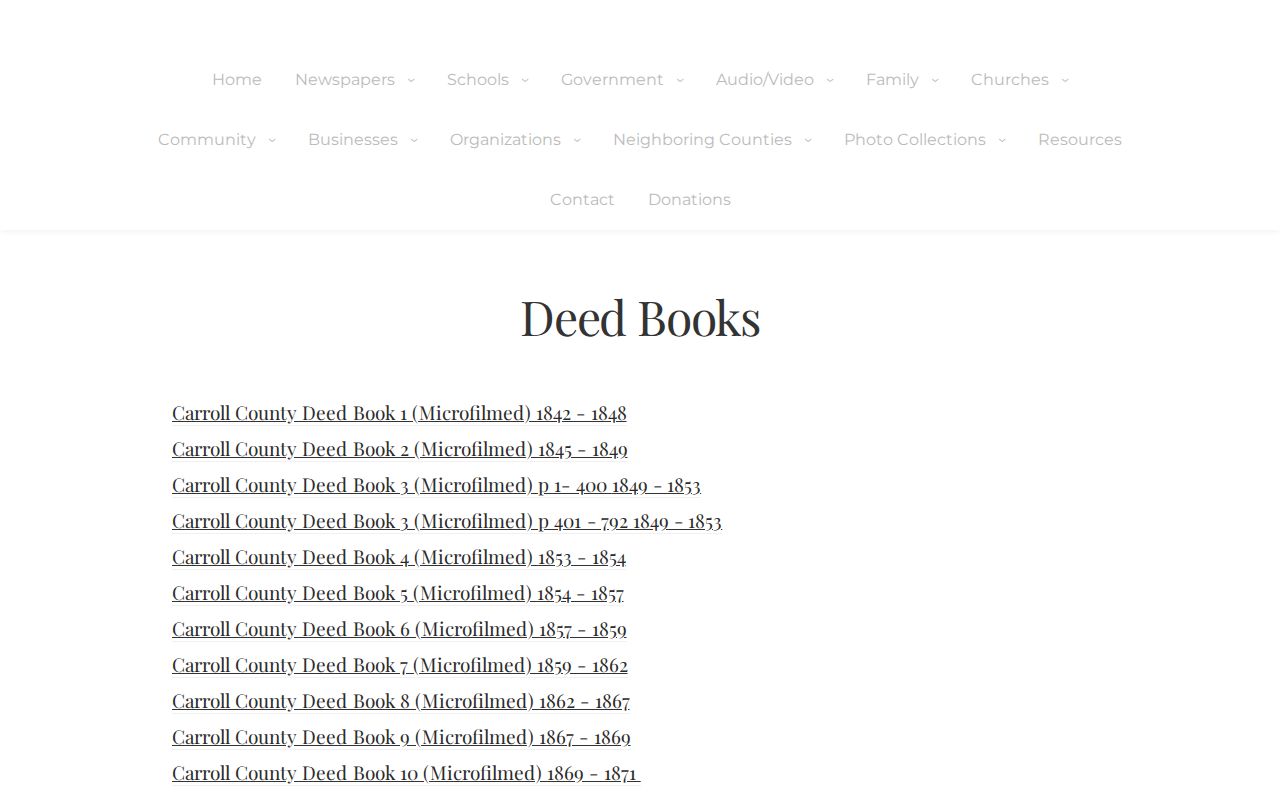
The transcription speeds the hunt; the deed settles it.
Carroll County’s Historic Name Indexes
The Library of Virginia lists Carroll grantor and grantee deed indexes from 1842 through 1927. Each index splits into A-J and K-Z runs. A separate deeds-of-trust index covers 1890-1937. Local instructions never state the online SRA cutoff. Those microfilm years are therefore the dependable published guide to the historic index. Many reels carry interlibrary loan marks.
Search both party roles as you move backward. Spellings, initials, and legal descriptions can shift across a long chain. Once the index hands you a book and page, read the instrument itself and compare acreage, survey calls, and adjoining land. The LVA Carroll microfilm catalog gives the year runs and reel notes.
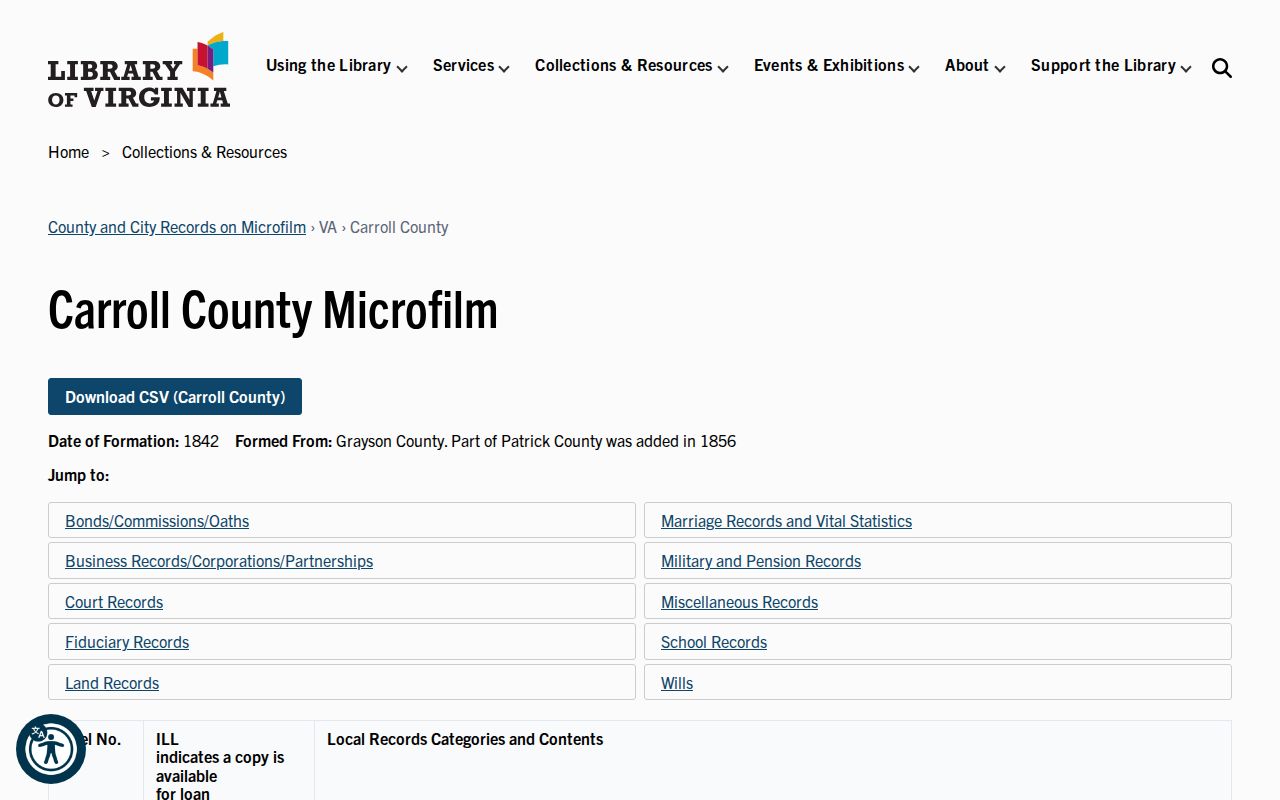
Use the date ranges to order the right reel.
Walking the Carroll Deed Chain Backward
A chain is rebuilt one conveyance at a time. The newest grantee deed names the transferor. That transferor often shows up as grantee in an earlier instrument. Match the land. Match each deed's description to the same tract, then follow the cited book and page or instrument number, remembering that old Carroll County deeds may rely on acreage, streams, roads, and neighbors rather than a modern map number.
- Find the latest instrument with the current grantee name or known citation.
- Copy its grantor, date, legal description, and prior-instrument reference.
- Search the grantor as a grantee and compare land calls in the earlier deed.
- Repeat until the needed period, then continue through LVA reels or Clerk books.
- Grantor / grantee
- The party conveying / receiving the deed interest.
- Chain of title
- The linked series of instruments for the same land.
- Legal description
- The land calls that tie an old instrument to a parcel.
Carroll County Plats and Surveys
The Library of Virginia catalogs Carroll's plats. Plat Book 1 runs from 1842 through 1961. Surveyors' Book 1 covers 1842 through 1910. A plat or survey can supply a lot layout when an old deed names an area instead of a street address. Carroll's subdivision ordinance adds another reason to look. It requires a plat to identify the source of title and the last chain instrument. A recorded map therefore bridges ownership and land shape.
Tracts split over time. When a former owner divided land, find the deed that created the split and the plat filed for the lots. Compare the current legal description with each earlier parcel rather than assuming a modern parcel number existed in every generation.
Carroll County Estate Transfers
Not every former owner exits through a sale. Carroll's Circuit Court Clerk holds wills, estate filings, lists of heirs, executor or administrator deeds, and court files. A death certificate proves a fact about a person. It is not a land conveyance. The property evidence is the executor's deed, the probate order, or the partition record.
Older vital records can settle a name or date. Virginia's Office of Vital Records opens death, marriage, and divorce records to public access after 25 years. Certified copies of current records generally require an eligible relationship and identification. The state's page lists a $15 copy or search fee. It also offers online application tracking. Virginia Vital Records explains the application and access rules. Still, the land instrument is what shows how title moved.
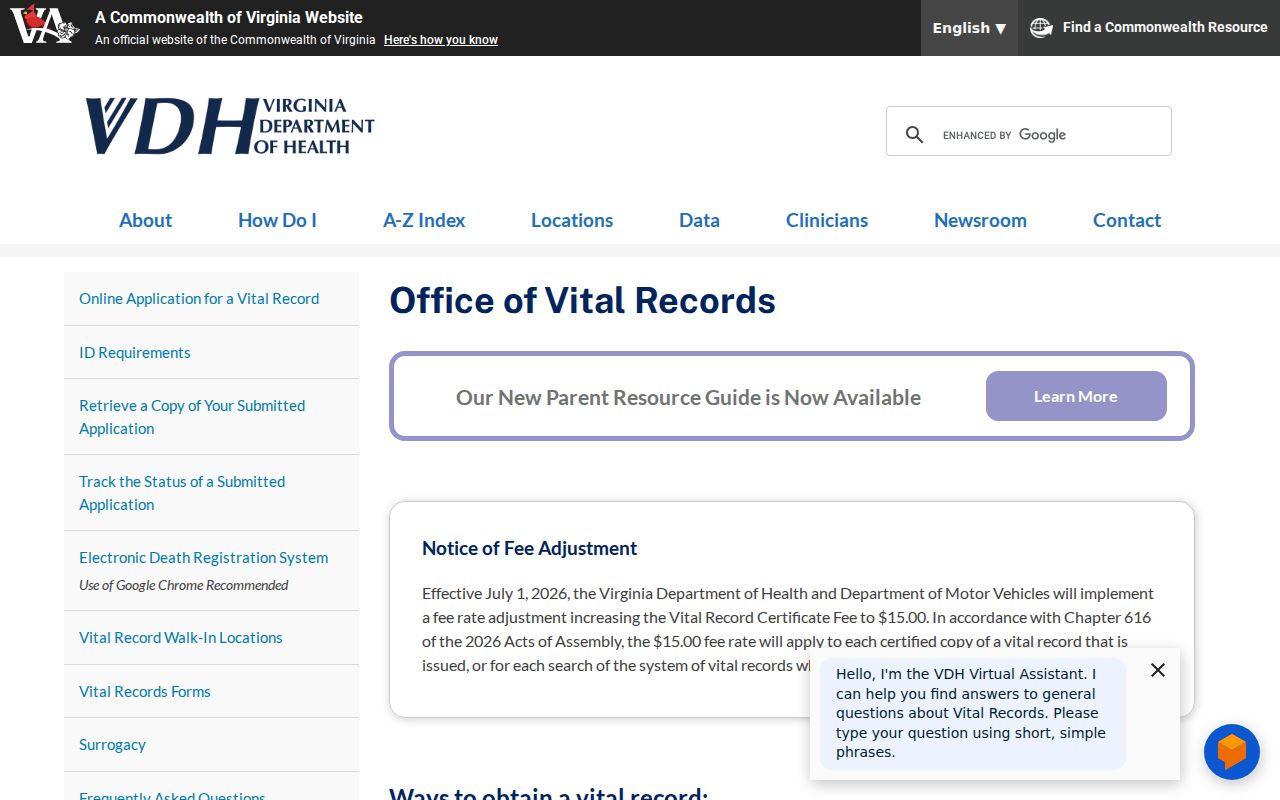
Vital records can back up a family link. The Clerk's probate or deed file is what documents the transfer of the land.
Carroll County Family History Sources
The Carroll County Historical Society maintains a private genealogy database holding more than 213,000 Carroll-connected people. The database also holds marriage, death, census, family-history, and photograph material. A seven-generation family-tree printout costs $5. The museum sits in the Historic Courthouse at 515 North Main Street in Hillsville. Its research contact is 276-728-4113. Records like these can explain a surname change. They can also clarify an estate relationship that sits behind a land transfer.
Family history points you toward a likely person. The ownership link still needs confirmation in the deed, will, assessment book, or court order. The Galax-Carroll Regional Library offers another route, with local newspapers, obituaries, directories, yearbooks, cemetery files, and genealogy holdings. Its public site does not list exact year runs.
The Historical Society's research page describes its database and the family-tree service.
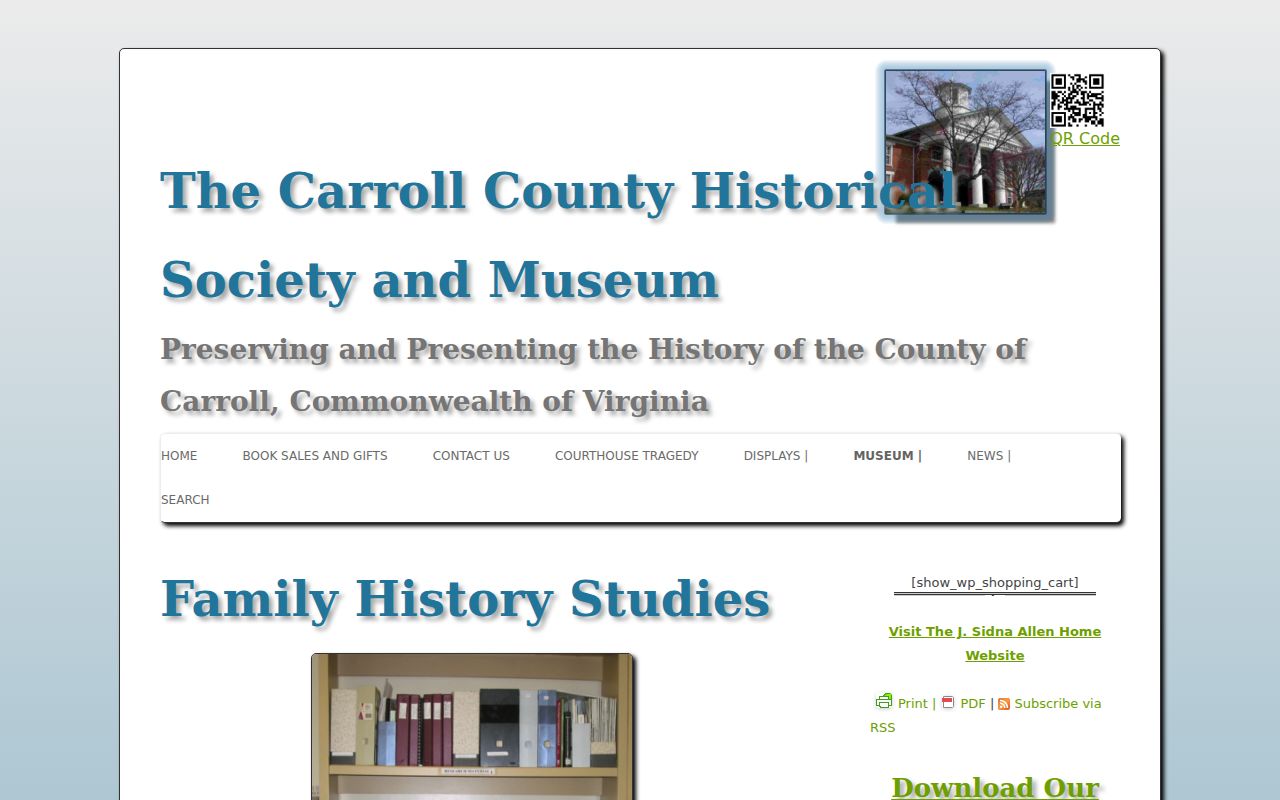
Historical clues can steer a deed search well. A family tree still cannot replace the recorded title instrument.
How Far Back Carroll Ownership Records Go
Carroll County deed records begin in 1842, the year the county formed from Grayson County. LVA's grantor and grantee indexes open that same year and run through 1927. Deed Books 1-10 carry the older path to 1871. WPA transcriptions serve as a finding aid. The modern SRA page publishes no earliest searchable year. Do not treat online coverage as complete back to the county's founding.
Lawful use. Former-owner research supports house history, title review, and property diligence. Virginia’s stalking law, Va. Code §18.2-60.3, addresses repeated conduct intended or known to place a person in reasonable fear. Do not use a deed chain to follow or harass a living person.